
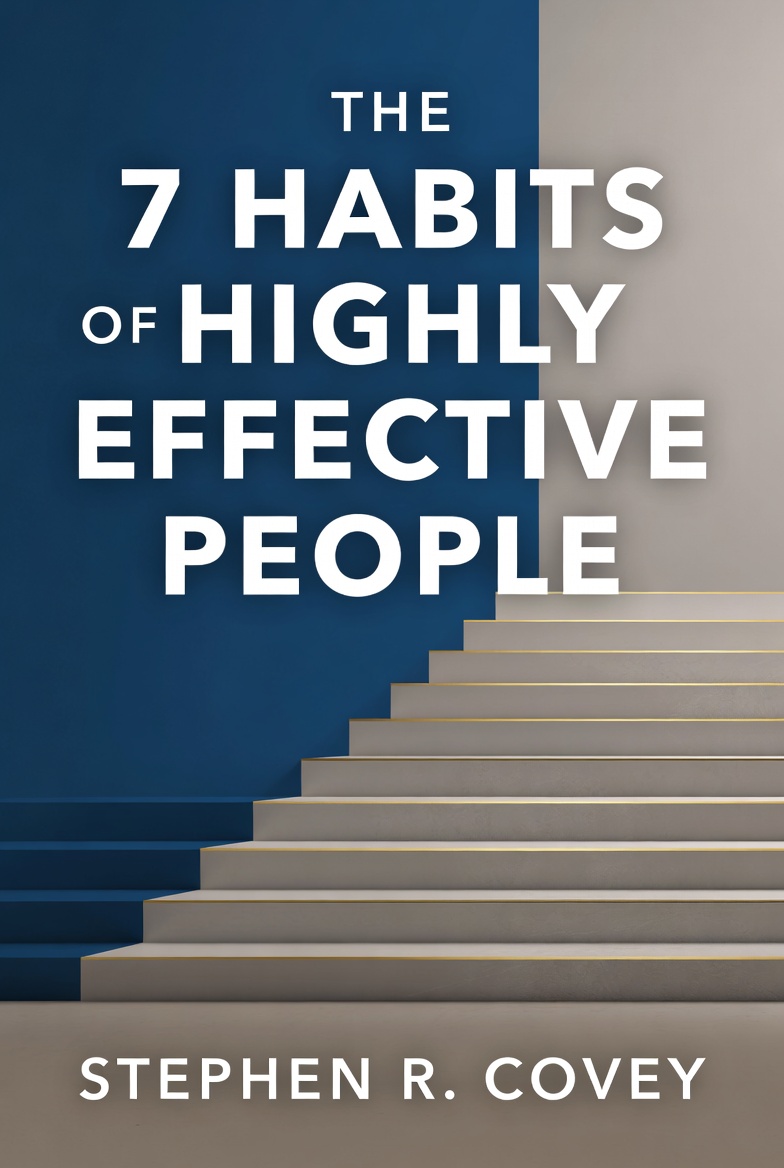
The 7 Habits of Highly Effective People Summary
The 7 Habits of Highly Effective People by Stephen Covey offers a timeless framework for becoming more effective in your work, your relationships, and your life. Instead of chasing quick fixes, this book shows how lasting success grows from principles, responsibility, and disciplined habits.
Listen to the audio lesson
Start with the audio version to quickly understand why effectiveness is not about doing more, but about doing what matters in the right way.
Best use: Listen once through, then read the summary and action steps below so you can start applying one habit immediately.
Want the full book? Explore the complete version on Amazon and see reader reviews, formats, and pricing.
View the Full Book on AmazonCheck current price, reviews, and available formats on Amazon.
The 7 Habits summary in plain English
If you want to become more effective in your work, your relationships, and your life, The 7 Habits of Highly Effective People offers a framework that has stood the test of time. Stephen Covey argues that real success does not come from quick fixes or surface-level habits. Instead, it comes from aligning your life with deeper principles like responsibility, clarity, discipline, and trust.
The book is built around seven habits that move you through three stages: from dependence, to independence, to interdependence. In other words, the journey begins with leading yourself well and then expands into working effectively with other people.
The first three habits: self-leadership
The first habit is to be proactive. This means taking responsibility for your actions and your results. Rather than obsessing over what you cannot control, you focus on your choices, your mindset, and your response. The second habit is to begin with the end in mind. Before you act, you define what success looks like. As a result, your effort gains direction instead of becoming scattered.
The third habit is to put first things first. Once you know what matters, you organize your time around priority, not urgency. This is where discipline becomes practical. You learn to do what matters most, even when it is not demanding immediate attention. Together, these first three habits are about self-leadership and personal responsibility.
The next three habits: relationships and collaboration
The fourth habit is to think win-win. Instead of seeing life as a competition, you look for solutions where both sides benefit. This builds trust and creates stronger long-term results. The fifth habit is to seek first to understand, then to be understood. Most people listen so they can respond. However, highly effective people listen so they can truly understand. That one change improves communication, reduces conflict, and strengthens relationships.
The sixth habit is to synergize. This is where collaboration becomes powerful. When people bring different perspectives together, the result is often better than anything one person could create alone. In that sense, real teamwork is not about sameness. It is about using differences wisely.
The final habit: renewal
The seventh habit is to sharpen the saw. This is about renewal. You cannot perform at a high level without taking care of yourself physically, mentally, emotionally, and spiritually. Rest, learning, and reflection are not distractions from effectiveness. Instead, they are part of what makes effectiveness sustainable.
What makes this book powerful is its foundation. It is not based on trends. It is based on principles. And because those principles do not change, the lessons remain useful across work, leadership, family life, and personal growth. At its core, this book is about becoming someone who is effective by design, not by accident.
Real success starts from the inside out, and lasting effectiveness grows from principles that do not change.
Ready to go deeper? The full book goes further with examples, frameworks, and practical ways to apply each habit in real life.
Get the Full Book on AmazonAbout The 7 Habits of Highly Effective People by Stephen Covey
The 7 Habits of Highly Effective People is a personal development and leadership book by Stephen Covey. It teaches that effectiveness grows from principles, not shortcuts. The habits cover personal responsibility, clarity, prioritization, trust, listening, collaboration, and renewal.
This summary of The 7 Habits of Highly Effective People by Stephen Covey breaks down the seven habits, the inside-out approach, and the key lessons that can improve both your decisions and your relationships.
The seven habits at a glance
The biggest lessons from The 7 Habits of Highly Effective People
Effectiveness is about principles, not hacks
Lasting results come from living by deeper principles instead of chasing quick fixes.
Self-leadership comes before teamwork
You lead others better when you first learn to lead yourself well.
Priorities matter more than urgency
Being busy is not the same as being effective if your time is not aligned with what matters most.
Listening changes relationships
Understanding people first creates better communication, trust, and problem-solving.
Renewal is part of effectiveness
You cannot sustain high performance without taking care of your mind, body, and overall well-being.
How to apply this today
The 7 Habits summary video
Prefer video? Watch the summary here, or open it directly on YouTube.
Watch this full video summary of The 7 Habits of Highly Effective People by Stephen Covey to see how the seven habits can improve your leadership, priorities, and relationships. As a result, you can build stronger decisions and better long-term outcomes.
Open on YouTubeWho this book is best for
The 7 Habits of Highly Effective People is ideal for people who want to become more effective in their work, their relationships, and their long-term decision-making. It is especially useful for leaders, professionals, entrepreneurs, students, and anyone trying to build a more principle-centered life.
It is also a strong fit for people who feel busy but want more clarity, better priorities, stronger communication, and a more reliable framework for personal growth.
More summaries you may like
Frequently asked questions
Is this a full audiobook?
No. This page includes a short audio lesson and written summary designed to help you understand the book quickly.
What is the main idea of The 7 Habits of Highly Effective People?
The main idea is that real effectiveness comes from living by principles, taking responsibility, prioritizing what matters, building trust, and renewing yourself consistently.
What are the first three habits about?
The first three habits focus on self-leadership: be proactive, begin with the end in mind, and put first things first.
Who should read The 7 Habits of Highly Effective People?
This book is ideal for people who want to improve their effectiveness, leadership, discipline, communication, and long-term decision-making.
Continue on Amazon
If this lesson clicks with you, go deeper into the full framework for effectiveness, priorities, communication, and long-term success.
Get the Full Book on AmazonAt a glance
Title: The 7 Habits of Highly Effective People
Author: Stephen Covey
Category: Leadership & Effectiveness
Best for: Priorities, leadership, communication, trust, long-term growth
As an Amazon Associate I earn from qualifying purchases. Amazon links on this page may earn Audiobook Lessons a commission at no extra cost to you.
Want another book lesson after this one?
Keep the momentum going with more summaries on focus, productivity, habits, mindset, money, leadership, and personal growth.